Do I Have to Speak Fast on the Duolingo English Test?
You can take a breath between ideas. In one of my speaking lessons, a student slowed down enough to explain what an animal might be waiting for. Let me show you what they actually said.

Table of Contents(4 sections)
“Can I talking that slow in the test?” a student asked me after describing a photo. I said, “Absolutely. You did a very good job there. You can do that.”
Then the student told me what happens on test day. “I’m talking so fast in the test.” What I wanted them to hear was what they’d just done at that slower pace. A minute earlier, when I asked what the animal in the picture was waiting for, they’d said, “I don’t know.” This time they had two ideas.
What did the student say when they slowed down?
Our class photo showed an animal in the ocean with a patch of red in the water. The student could see the animal, but couldn’t tell whether it was a whale or a dolphin. That was fine. I wanted to know why they thought it was swimming around that spot.
Student “For waiting.”
Me “Waiting for what?”
Student “I don’t know.”
So we worked through two possibilities together. Maybe there was food there. Maybe the animal was waiting for another member of its family. I asked the student to try the picture again. This time they gave me both possibilities and used the red patch to explain why they thought another animal might be hurt. Maybe did a lot of work there. The student could see the color. What had happened in the water was still their guess.
Afterward, the student put their finger on what the slower pace gave them.
“Because I have time for thinking.”
How fast should I speak on the DET?
Try the pace you’d use if you were showing me the picture and I couldn’t see it. Tell me one thing you see. Then ask yourself the same question I asked this student in class. “Because what? What do you see?” Give yourself a moment to find that detail, then tell me how it connects to your idea.
Duolingo says its scoring considers fluency and pronunciation, including how you pause and where you put stress. My advice in this lesson was about one particular moment. The student had finished one thought and needed a moment to work out the next one. Read Duolingo’s explanation of speaking scores.
Can you hear where the idea changes?
Look at the red patch in the water and listen to my fast answer. What do I think the animal might be doing? Now play the slower answer. What other possibility do you hear, and which detail in the photo gave me that idea?

1. When I rush
Read the fast recording transcript
I can see an animal in the ocean. I’m not sure if it’s a whale or a dolphin. I can see red in the water behind him. Maybe he’s waiting for food.
2. When I give myself a moment
Read the slow recording transcript
I can see an animal in the ocean. I’m not sure if it’s a whale or a dolphin. I can see red in the water behind him. Maybe he’s waiting for food.
Or maybe the red in the water means that another predator has attacked him, and now he’s hurt.
In the fast answer, I stop after “Maybe he’s waiting for food.” Listen to what I do with the extra time in the slow answer. I go back to the red in the water. Maybe another predator attacked him and now he’s hurt. You can point to the color in the photo. The word “maybe” tells you I’m guessing about what happened.
Try it yourself with a new photo
In class, I showed the student a photo of a man with a cow. The student noticed something behind him that helped them explain where they thought he was.
“And I see like more cows behind him. That’s why I’m pretty sure he’s in a farm.”
Now try this photo. Imagine you’re the one holding the camera. Which cow seems to be looking right at you?
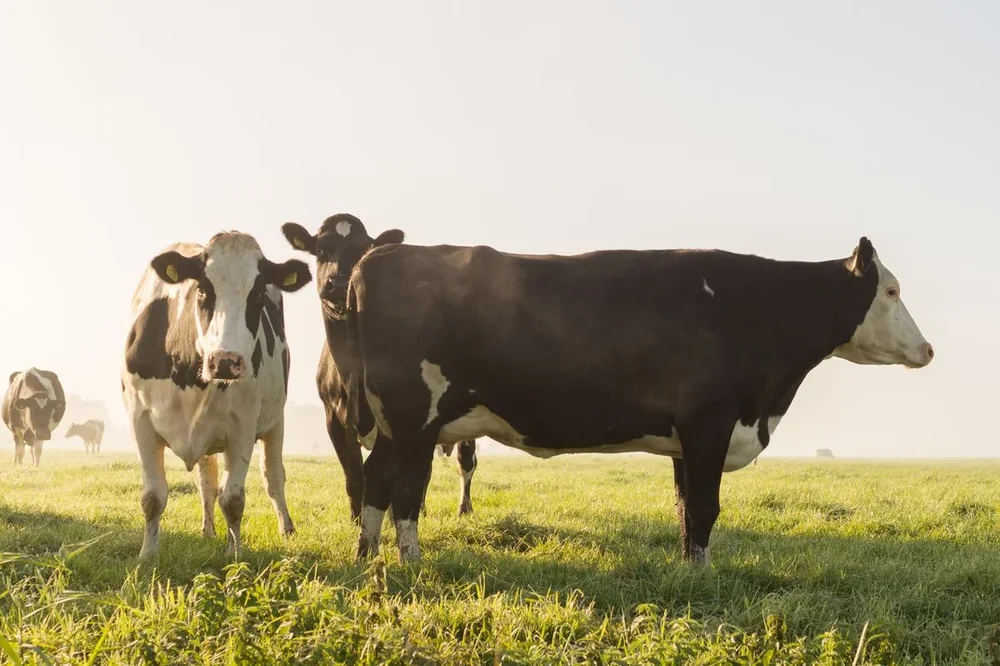
Say your answer out loud. Which cow do you think has noticed you? Take a breath. What do you see that makes you think so? Record your answer on your phone.
Play it back. If I couldn’t see the photo, would I know which cow you meant? Would I know why you picked that one? If I’m still guessing, try it again and tell me what you noticed about its head.
Not sure why your DET score is stuck?
Take a free practice test and see exactly where your score leaks — before you pay for the real thing.
Start the free practice test →Keep reading

Do I Have to Answer Every Part of a Duolingo English Test Writing Prompt in Order?
Duolingo’s directions don’t specify which idea has to come first within one response. For this school prompt, I’d use the printed questions as an outline. But if the first thing you remember is planting ten trees, write that down first. Then look back at the prompt. Which question do those ten trees help you answer, and which questions do you still need to cover?

Can I Argue Both Sides in a Duolingo English Test Writing Answer?
Yes, you can argue both sides. If you say yes in the first paragraph and no in the second, tell me what changed. In this example, the company found out the ticket ad was fake and kept showing it.

Stuck at the Same DET Writing Score? You're Retelling, Not Analyzing
Your vocabulary is fine. Your grammar works. Real students' own words reveal the invisible ceiling — retelling — and a 60-second test tells you whether it's yours.